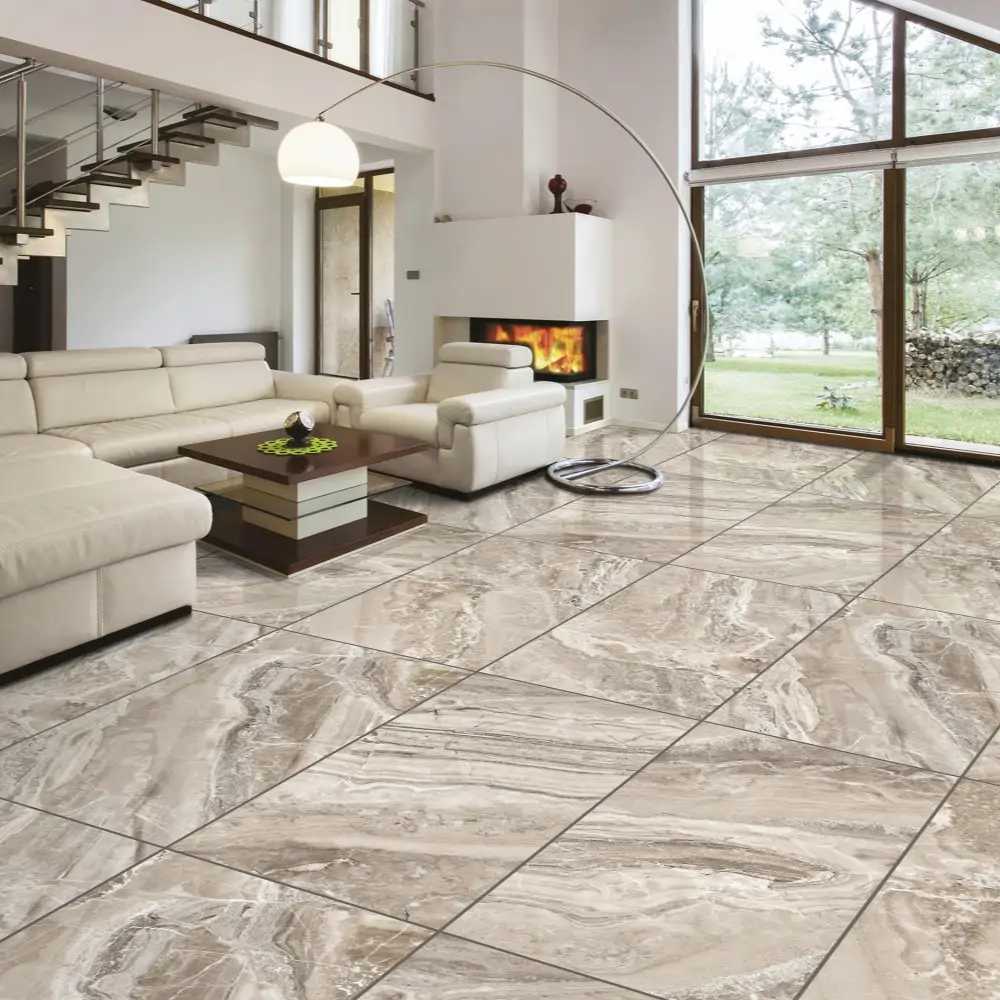
Floor Tile and Large-Format Slabs
From standard ceramic to 48-inch porcelain panels. Flat, level, and built to hold up through Denver's seasonal shifts.
The Challenge of a Flat Floor
Floor tile looks simple from the outside. In practice, the quality of the result depends almost entirely on what happens before the first tile is set. A floor that is not flat within the TCNA tolerance of 1/8 inch over 10 feet will produce tiles that rock, lippage between adjacent tiles that catches feet and looks wrong, and grout joints that crack as the tiles shift under load.
We check every floor before we set anything. On concrete slabs, we grind high spots and fill low spots with a self-leveling compound. On wood subfloors, we check for flex, add blocking or additional fasteners where needed, and install cement backer board to create a stable, non-flexing surface. This prep work is not optional, and we include it in the scope of every floor tile estimate.
Large-Format Tile Specifically
Tiles over 15 inches in any dimension require additional care. The larger the tile, the more visible any variation in flatness becomes. Large-format porcelain also needs to be back-buttered, meaning thinset is applied to the back of the tile as well as the floor, to achieve the 95% coverage required by industry standards. Tiles with less than full coverage behind them can crack under point loads, particularly in doorways and high-traffic areas.
We use medium-bed mortar for large-format work, which stays workable longer and provides a more consistent setting bed. Lippage control clips or wedges are used during installation to keep adjacent tiles at the same plane while the mortar cures.
Floor Types We Work With
Concrete slab, plywood subfloor with cement board, existing tile (overlay, where structurally appropriate), heated floor systems (we set tile over electric radiant mat systems), and exterior concrete or pavers. We also handle transitions between tile and adjacent flooring materials, including hardwood, carpet, and LVP.
Common Questions
How long do I have to stay off the floor after installation?
Light foot traffic is typically possible 24 hours after setting, but we recommend waiting 72 hours before heavy use. Grout should not be walked on for at least 24 hours after application. We will give you specific timing based on the materials used on your project.
Can you tile over an existing tile floor?
Sometimes. The existing floor needs to be firmly bonded, structurally sound, and within acceptable flatness tolerances. Overlaying also raises the floor height, which affects transitions at doorways and can create issues at cabinets and appliances. We assess this during the estimate and give you an honest answer.
What grout joint size do you recommend for large-format tile?
Most large-format porcelain is rectified, meaning it is cut to precise dimensions after firing. This allows for very tight joints of 1/16 to 1/8 inch. Tight joints reduce the visual interruption of the pattern and look cleaner with slab-look materials. We will discuss joint size during the layout conversation.


Available in These Areas
Thinking about new floors?
Call (970) 410-2033 or send us a message. We are available daily 7:00 AM to 10:00 PM.